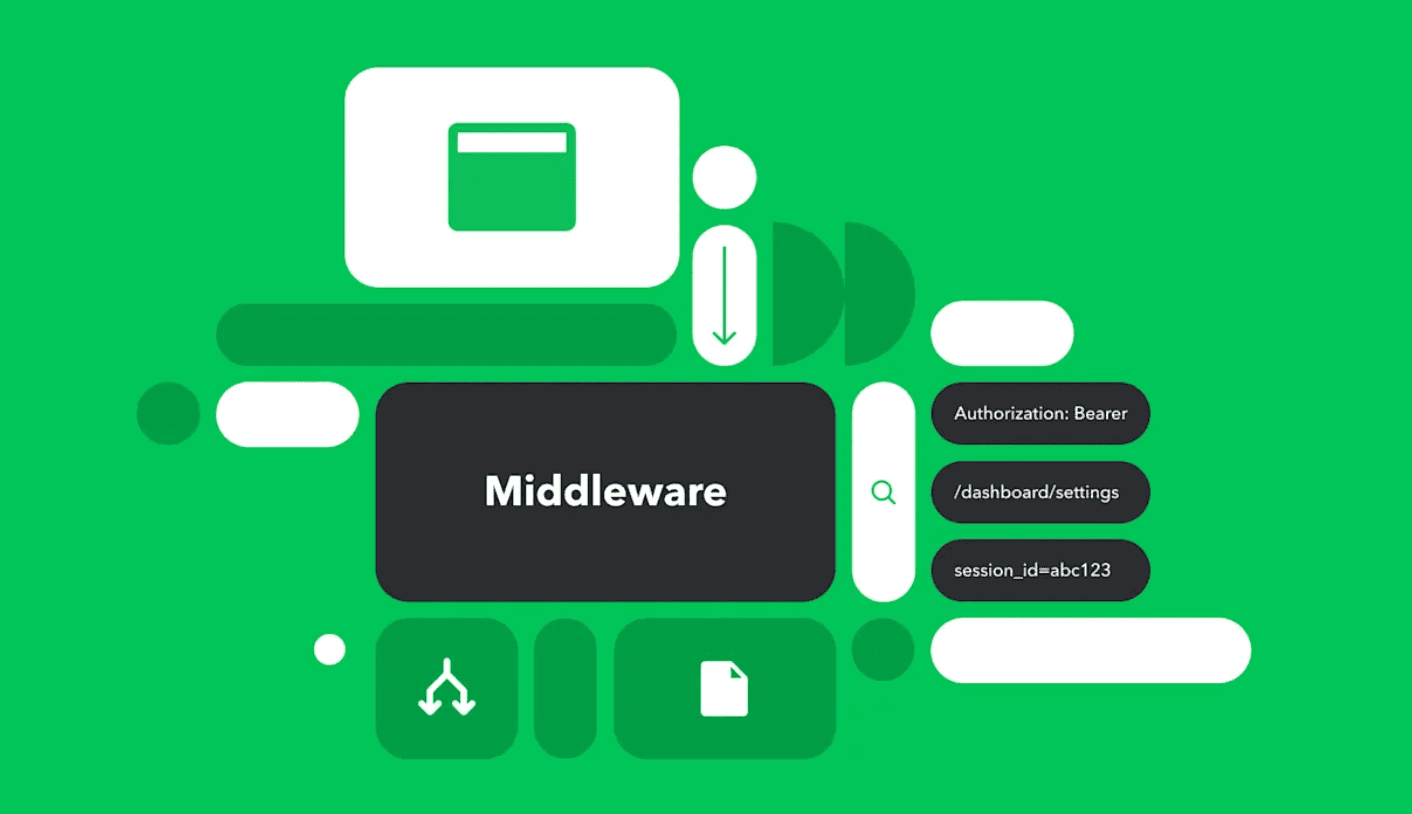
Mastering Next.js Middleware: The Gatekeeper of Modern Web Apps
A deep dive into how Next.js Middleware acts as a programmable gatekeeper, enabling global security policies (CSP), authentication, and low-latency edge logic for modern web applications.
Website Security: The Hidden "Guard" Named Middleware
Imagine you are visiting a high-security building. Before you can go to the office you're looking for, you have to pass through the front desk or a security guard.
The guard checks two things:
- Who are you? (Are you allowed to be here?)
- Where are you going? (Do you have directions?)
In the world of websites, Middleware is that security guard.
1. What exactly is Middleware?
Usually, when you click a link, the website immediately starts building the page for you. With Middleware, the website stops for a tiny fraction of a second to run a quick "check" before it shows you anything.
It sits right in the middle (hence the name!) between you clicking a button and the page actually appearing on your screen.
2. Why is this so helpful?
It Keeps the "Bad Guys" Out
Just like a guard blocks someone without an ID, Middleware can block "bots" or hackers before they ever touch your website's data. It makes sure that only safe, real people are using the site.
It Remembers Who You Are
Have you ever tried to open your "Profile" page and been sent to the "Login" page instead? That was Middleware! It checked to see if you were logged in and "redirected" you to the right place so your private information stays safe.
It’s Incredibly Fast
Middleware runs on special, super-fast servers located all over the world. This means the "check" happens so fast that you don't even notice it's happening. Your website stays snappy and responsive.
3. How does it look in real life?
Here is a very simple example of what the "Security Guard" code looks like. Even if you don't know how to code, you can see how it makes decisions:
Breaking Down the Code: How the "Guard" Works
If you looked at the code above and felt a bit lost, don't worry! Here is a simple breakdown of what is happening in those few lines:
1. The Entrance (export function middleware)
This is the starting line. It tells the website: "Every time a visitor tries to load a page, run this logic first."
2. Reading the Map (request.nextUrl.pathname)
The request object contains all the info about the visitor. This specific line looks at the "Pathname" (for example: /about or /contact) so the code knows exactly where the visitor is attempting to go.
3. The Decision Point (if (pageName === "/admin"))
This is a simple "Yes or No" check. It says: "If the visitor is trying to enter the sensitive /admin area, trigger the security check. If they are going anywhere else (like the home page), just let them through."
4. Checking the ID Badge (request.cookies.get)
Websites use "Cookies" to remember you. Think of a cookie as a digital ID badge. The code looks inside the visitor's browser to see if they have a badge called user_session.
- If they have it: They are logged in!
- If they don't: They are a stranger.
5. The Detour (NextResponse.redirect)
If the visitor failed the check (no ID badge), this line takes over. It stops them from seeing the secret page and automatically "pushes" them over to the /login page instead.
6. The Green Light (NextResponse.next())
This is the most important part for a smooth experience. If the visitor is allowed to be there, NextResponse.next() tells the website: "Everything looks good, carry on!" The page then loads normally for the user.
Summary
Middleware is the silent protector of the internet. It ensures that every time you browse a site:
- You stay Safe.
- Your data stays Private.
- You get to the Right Place quickly.
Next time you get sent to a login screen or a website blocks a suspicious link, you can thank the Middleware working hard behind the scenes!
Fuel the Architecture
If this deep dive helped you build something better, consider fueling my next late-night coding session.
Newsletter Updates
Join 1,000+ engineers receiving weekly insights into AI, cloud architecture, and technical guides.