Mesh Networking: Bridging Global Infrastructure with Docker Overlay Networks
Local bridge isolation is the default, but multi-host orchestration requires a global network fabric. Analyze the architectural shift from single-host Bridge networks to distributed Overlay networks, featuring a practical zero-downtime WordPress deployment logic.
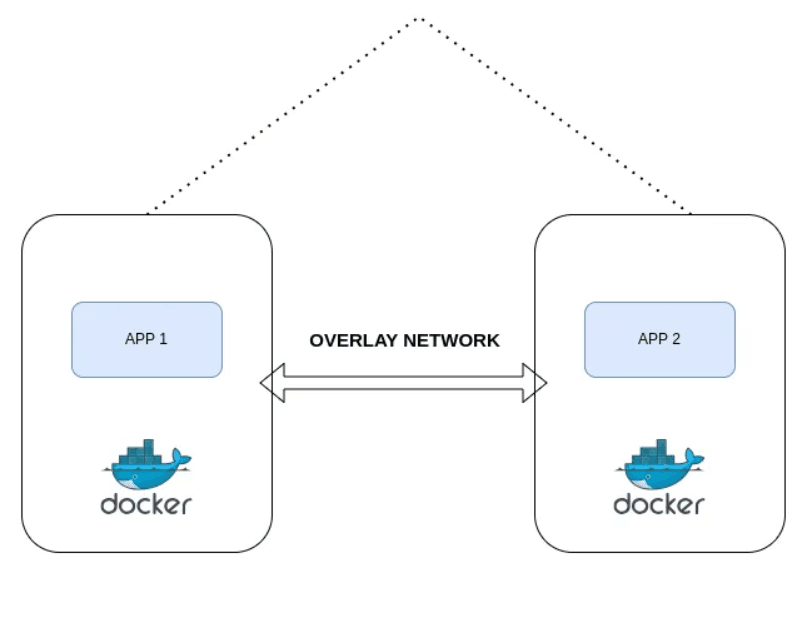
In a containerized environment, networking is the nervous system of your architecture. While the standard Docker Bridge is sufficient for localized testing, moving to a production-grade distributed system requires a network that can span physical boundaries. This is where the Docker Overlay Network becomes the essential fabric for multi-host communication.
By understanding the hardware-to-software mapping of these two protocols, engineers can build clusters that are not only scalable but inherently secure through logical isolation.
Technical Breakdown: Bridge vs. Overlay
1. The Local Bridge (L2 Isolation)
The Bridge network is the default operational mode for Docker. It creates a software-defined bridge at the host level.
- Scope: Confined to a single physical or virtual machine.
- Discovery: Containers resolution is limited to the local daemon's list.
- Barrier: Without manual port-mapping (
-p), containers on Host A cannot communicate with those on Host B, even if they share the same subnet.
2. The Global Overlay (L4/Application Encapsulation)
The Overlay network operates as a virtual mesh that spans multiple Docker hosts. It is the backbone of Docker Swarm.
- Scope: Multi-host. It abstracts the underlying infrastructure into a single logical network.
- Discovery: Native service discovery. Every service becomes a reachable hostname across the entire cluster.
- Security: Traffic between hosts is encapsulated (VXLAN) and can be optionally encrypted with a single flag (
--opt encrypted).
Case Study: High-Availability WordPress Orchestration
To illustrate the power of overlay networking, we will architect a standard stateful application: a WordPress node communicating with a MySQL persistence node across a distributed cluster.
Step 1: Initializing the Global Fabric
First, we establish the network that will bridge our cluster nodes.
Step 2: Provisioning the Persistence Node
We deploy the database as a service. Because it is on the overlay network, it is now "globally" visible to any other service in the swarm.
Step 3: Provisioning the Delivery Node
Next, we deploy the WordPress application. Crucially, we use the service name mysql as the database host. Docker's internal DNS will resolve this to the correct container, regardless of which physical host it lives on.
The Result: Seamless Orchestration
Through this overlay architecture:
- Distributed State: WordPress can exist on Server 1 while MySQL exists on Server 2.
- Implicit Connectivity: The application connects via internal service names, eliminating the need for hardcoded IP addresses or complex environment mappings.
- Encapsulation: The communication between the web server and the database is private, encrypted, and invisible to the outside world, leaving only port 8080 exposed for end-user traffic.
Conclusion
Choosing the right network driver is a foundational architectural decision. While Bridge networks serve as the starting point, Overlay Networks are the key to unlocking the true power of container orchestration, providing the secure and scalable connectivity required for modern, distributed cloud systems.
Fuel the Architecture
If this deep dive helped you build something better, consider fueling my next late-night coding session.
Newsletter Updates
Join 1,000+ engineers receiving weekly insights into AI, cloud architecture, and technical guides.