Distributed Connectivity: Mastering Docker Overlay Networks
Traditional bridge networks are confined to a single host. Discover how Docker Overlay Networks break the hardware barrier, enabling seamless, secure, and multi-host communication for distributed microservices.
In a standalone Docker environment, containers usually communicate via a local bridge network. However, in a production-grade distributed system, services are spread across multiple physical or virtual hosts. To bridge this gap without exposing internal ports to the public internet, we use Overlay Networks.
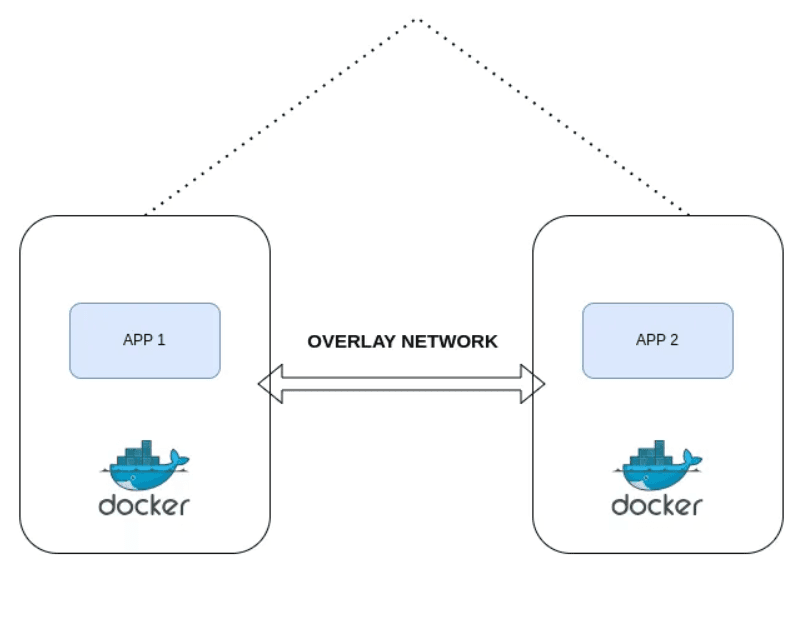
An Overlay Network creates a distributed logical network across all nodes in a cluster (Docker Swarm). This allows containers on Host A to communicate with containers on Host B as if they were on the same local network, providing native service discovery and end-to-end encryption.
The Architecture: A Triple-Tier Microservice Stack
To demonstrate the power of overlay networking, we will architect a standard three-tier application:
- Database Node: Persistent data storage (MongoDB).
- Backend Node: Internal logic processing.
- Frontend Node: Public-facing entry point.
Phase 1: Initializing the Global Network
First, we establish the logical fabric that will connect our hosts. By using the overlay driver, we ensure the network is available across the entire swarm.
Phase 2: Orchestrating the Service Lifecycle
We will now deploy our services into this shared fabric. Because they exist on the same overlay, they can resolve each other by their Service Name instead of volatile IP addresses.
- The Persistence Node (Database) We start with the database to ensure the backend has a target to connect to.
- The Logic Node (Backend) The backend is deployed into the same network, allowing it to reach the database using the hostname database.
- The Gateway Node (Frontend) The frontend serves as the entry point. It is connected to the overlay to communicate with the backend, while also exposing port 80 to the host network for public traffic.
Phase 3: Seamless Service Discovery
The true power of this architecture lies in how these containers interact. Even if the Frontend is on Server 1 and the Backend is on Server 2:
Abstraction: The underlying IP addresses of the hosts are irrelevant; the Overlay Network handles the routing and encapsulation between nodes automatically.
Conclusion
Utilizing Docker Overlay Networks transforms a collection of isolated containers into a unified, distributed microservices architecture. It provides a secure, easy-to-manage environment where services can scale and move across infrastructure without breaking their internal communication logic.
Happy Orchestrating..!
Fuel the Architecture
If this deep dive helped you build something better, consider fueling my next late-night coding session.
Newsletter Updates
Join 1,000+ engineers receiving weekly insights into AI, cloud architecture, and technical guides.